Introduction
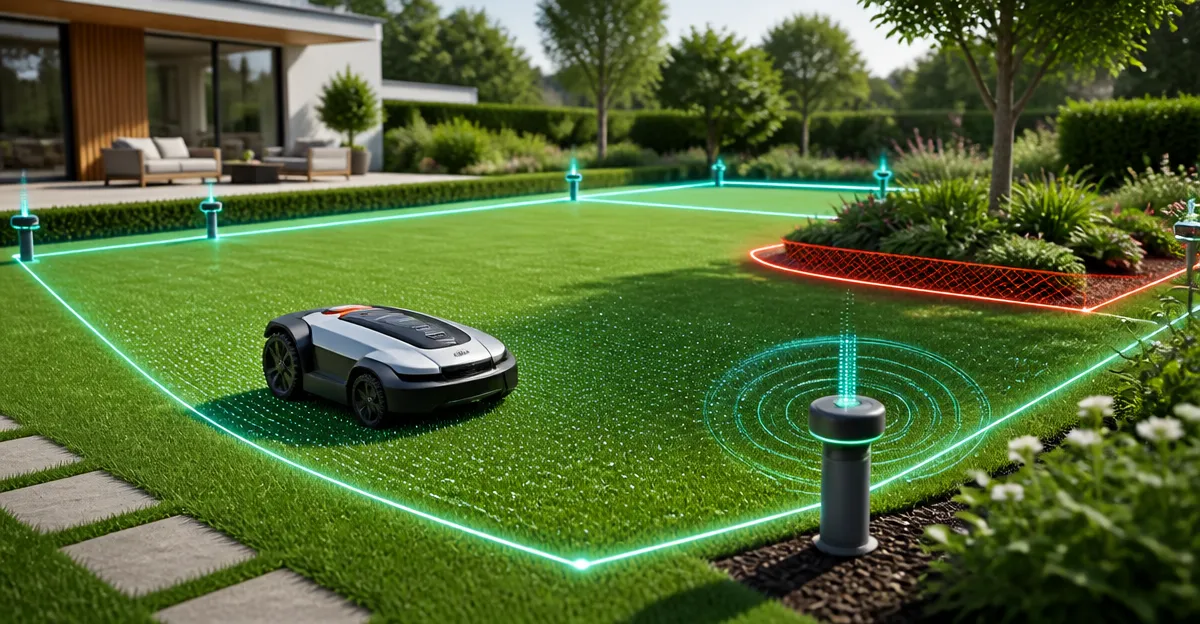
Virtual boundary beacons have become essential components for modern robot lawn mowers. This guide explains the technology, outlines how to install and configure beacons, compares the leading mower models, and provides troubleshooting techniques. Readers will gain a clear understanding of why virtual boundaries improve safety, efficiency, and user convenience. By the end of the article, one will be prepared to select the appropriate system and maintain optimal performance.
Background and Context
Traditional robotic mowers rely on physical perimeter wires that must be buried or clipped around a property. While effective, wires are labor intensive, prone to damage, and limit flexibility when the landscape changes. Virtual boundary beacons replace wires with wireless signals that define mowing limits through GPS, RTK, or local radio triangulation. The mower receives continuous position updates and respects the invisible fence without contacting any physical barrier.
Key technologies include Real‑Time Kinematic (RTK) positioning, which provides centimeter‑level accuracy, and Vision‑Based Obstacle Detection that augments GPS data with camera input. When combined, these technologies enable the mower to navigate complex terrains, steep slopes, and narrow corridors while avoiding obstacles such as trees, garden furniture, or pet toys.
Understanding the underlying concepts is crucial before selecting a product. Accuracy, signal reliability, and integration with smartphone applications determine the overall user experience. The following sections explore each concept in depth and illustrate how they apply to specific models.
Core Concepts and Strategies
1. Virtual Boundary Creation
Virtual boundaries are generated through a mapping process that records the mower’s path around the desired mowing area. Users typically drive the mower manually along the perimeter using a smartphone app. The app then stores the GPS or RTK coordinates and creates a closed polygon that the mower treats as its operational limit.
Two common approaches exist:
- One‑tap Auto Mapping: The mower automatically scans the area and generates a map based on sensor data. This method is fast but may require manual refinement in complex yards.
- Manual Edge Tracing: Users walk the mower along the exact edge, ensuring precise coverage of irregular shapes.
Both methods benefit from clear sky visibility for satellite signals and minimal electromagnetic interference.
2. Beacon Communication Protocols
Beacons transmit positioning data using either cellular, Wi‑Fi, or dedicated radio frequencies. The most reliable protocol for large properties is RTK combined with Vision‑Based (VIO) correction, which mitigates signal loss caused by trees or buildings. Some manufacturers also integrate 360° vision systems to supplement GPS data, providing redundancy in dense foliage.
When evaluating a system, consider the following factors:
- Frequency band (e.g., 2.4 GHz, 5 GHz, or proprietary bands)
- Power consumption and battery life of the beacon unit
- Support for multi‑zone mapping and dynamic GeoFence adjustments
3. Integration with Smart Home Assistants
Modern robot mowers can be controlled via voice assistants such as Alexa or Google Home. This integration allows users to start, pause, or modify schedules without opening an app. The capability depends on the mower’s cloud service and the openness of its API.
For households that already employ smart home ecosystems, selecting a mower with native voice support reduces friction and enhances overall convenience.
Recommended Models and Their Virtual Boundary Features
The following products represent the current market leaders for virtual boundary beacons. Each model has been evaluated based on accuracy, ease of setup, obstacle avoidance, and user feedback.
Segway Navimow X430
The Segway Navimow X430 offers an all‑wheel‑drive system capable of climbing 84 % slopes and crossing obstacles up to 2.8 inches. Its dual 180 W motors deliver a 17‑inch cutting width, while the EdgeSense technology reduces trimming margins to under 2 inches. The mower utilizes EFLS tri‑frequency Network RTK combined with 360° vision and VIO for centimeter‑level positioning, even under trees.
- Price: $2,249.00
- Rating: 4.2/5.0 (98 reviews)
- Key virtual‑boundary features: One‑tap Auto Mapping, GeoSketch editing, AI‑powered VisionFence recognizing over 200 obstacle types.
Positive customer sentiment highlights reliable performance on complex terrain, whisper‑quiet operation, and robust app functionality. Negative feedback mentions occasional cutting‑height drift and the need for a subscription after the initial GPS trial.
ECOVACS Goat O1000 RTK
The ECOVACS Goat O1000 RTK is designed for lawns up to 1/4 acre and features LiDAR‑enhanced RTK navigation with automatic mapping in roughly five minutes. TruEdge edge cutting reduces the need for manual trimming, and AIVI 3D obstacle avoidance handles objects as small as 2.3 ft wide.
- Price: $699.00
- Rating: 4.1/5.0 (14 reviews)
- Key virtual‑boundary features: Wire‑free setup, multi‑zone management via the ECOVACS app, and real‑time progress monitoring.
Customers appreciate the rapid setup and precise navigation, while some report difficulty with RTK antenna placement and occasional mapping quirks.
Segway Navimow i110N
The Segway Navimow i110N provides a 1/4‑acre coverage area with enhanced EFLS 2.0 RTK and vision sensors. It can identify more than 150 obstacle types and includes AI‑assisted mapping that automatically detects lawn edges. The unit ships with a comprehensive accessory kit and offers an optional 4G anti‑theft module.
- Price: $788.00
- Rating: 4.0/5.0 (502 reviews)
- Key virtual‑boundary features: AI‑assisted Assist Mapping, multi‑zone virtual boundaries, and customizable mowing patterns.
Positive reviews emphasize time savings and high‑quality cut, whereas negative comments focus on occasional mapping drift and limited support for complex satellite environments.
ECOVACS Goat O1000 RTK Care
The ECOVACS Goat O1000 RTK Care bundles 36 replacement blades for extended maintenance cycles and includes an RTK extension cable for improved signal reception. It supports wire‑free operation, automatic multi‑zone mapping, and a smart auto‑mapping algorithm that reduces user intervention.
- Price: $664.00
- Rating: 4.0/5.0 (174 reviews)
- Key virtual‑boundary features: RTK precision navigation, auto‑mapping, and customizable zone scheduling via the app.
Users commend the quick 30‑minute setup and reliable performance on modest lawns, while some criticize AI‑driven mapping that occasionally merges separate yards.
Segway Navimow i105N
The Segway Navimow i105N targets 1/8‑acre properties but now supports up to 1,200 sq m after a firmware update. It features EFLS 2.0 RTK, AI‑assisted mapping, and 150+ obstacle detection types. The system includes a comprehensive accessory set and optional 4G anti‑theft tracking.
- Price: $669.00
- Rating: 4.1/5.0 (394 reviews)
- Key virtual‑boundary features: AI‑assisted Assist Mapping, multi‑zone management, and OTA updates for continuous improvement.
Positive feedback notes quiet operation and ease of use, while negative remarks focus on map loss incidents and the need for a separate antenna mount.
Comparison and Selection Guide
Choosing the right robot mower depends on lawn size, terrain complexity, and desired level of automation. The table below summarizes the most relevant criteria.
| Model | Coverage | Price | RTK Accuracy | Obstacle Detection | App Sophistication |
|---|---|---|---|---|---|
| Segway Navimow X430 | Up to 1 acre | $2,249 | Centimeter‑level (EFLS tri‑frequency) | 200+ types (AI VisionFence) | Advanced (GeoSketch, voice control) |
| ECOVACS Goat O1000 RTK | Up to 1/4 acre | $699 | Centimeter‑level (RTK + LiDAR) | 3D ToF + AIVI | User‑friendly (zone scheduling) |
| Segway Navimow i110N | 1/4 acre | $788 | Centimeter‑level (EFLS 2.0) | 150+ types (AI camera) | Comprehensive (AI Assist Mapping) |
| ECOVACS Goat O1000 RTK Care | 1/4 acre | $664 | Centimeter‑level (RTK) | 3D ToF + AIVI | Robust (auto‑mapping, blade bundle) |
| Segway Navimow i105N | Up to 1,200 sq m (~0.3 acre) | $669 | Centimeter‑level (EFLS 2.0) | 150+ types (AI camera) | Rich (OTA updates, multi‑zone) |
For large, uneven properties with steep slopes, the Segway Navimow X430 offers the most power and terrain capability. For modest suburban lawns where budget is a concern, the ECOVACS Goat O1000 RTK Care provides excellent value with a blade‑replacement bundle. Users who require extensive zone control and AI‑driven mapping may prefer the Segway Navimow i110N or i105N models.
Best Practices and Tips for Virtual Boundary Setup
- Ensure Clear Sky View for RTK Antenna: Place the antenna at least six feet above ground and away from tall structures. This maximizes satellite visibility and reduces mapping errors.
- Perform a Preliminary Walk‑Through: Identify potential signal‑blocking obstacles such as overhangs, dense foliage, or metal fences before mapping.
- Use the One‑Tap Auto Mapping Feature Wisely: Allow the mower to complete a full perimeter pass before editing zones. Minor adjustments can be made later using the app’s GeoSketch tool.
- Set Reasonable Edge‑Cutting Aggressiveness: Excessive edge settings may cause the mower to cross onto driveways or flower beds. Start with a conservative setting and increase gradually if needed.
- Schedule Regular Firmware Updates: Manufacturers release OTA updates that improve RTK algorithms, obstacle detection, and battery management.
- Leverage Voice Integration for Convenience: Connect the mower to Alexa or Google Home to start or pause mowing without opening the app, especially during rainy conditions.
Frequently Asked Questions
What is the difference between RTK and standard GPS?
RTK (Real‑Time Kinematic) uses a base station to correct satellite signals, delivering centimeter‑level accuracy. Standard GPS provides meter‑level precision, which may result in boundary drift on large or irregular lawns.
Can I use a virtual boundary mower without Wi‑Fi?
Yes, many models rely on cellular or dedicated radio links for beacon communication. The ECOVACS Goat O1000 RTK Care includes an RTK extension cable that can be paired with a cellular module to operate independently of home Wi‑Fi.
How often do I need to replace the cutting blades?
Blade wear depends on grass type and mowing frequency. The ECOVACS Goat O1000 RTK Care ships with 36 replacement blades, typically lasting six to twelve months for average use.
What should I do if the mower loses the virtual boundary during operation?
First, verify that the RTK antenna still has an unobstructed view of the sky. Then check the app for any GeoFence alerts. If the issue persists, reboot the mower and re‑run the auto‑mapping routine.
Is it possible to integrate a robot mower with existing smart‑home security systems?
Many manufacturers offer optional 4G anti‑theft modules that can send location alerts to a security dashboard. The Segway Navimow i110N and i105N provide such modules as add‑ons.
Can virtual boundaries be edited after the initial setup?
Yes, all featured models allow post‑mapping edits via their respective smartphone apps. Users can add or remove zones, adjust edge‑cutting parameters, and redefine GeoFences at any time.
Conclusion
Virtual boundary beacons have transformed robotic lawn mowing from a niche hobby into a practical household solution. By understanding RTK positioning, mapping strategies, and obstacle‑avoidance technologies, homeowners can select a mower that matches their property’s size and complexity. The models reviewed in this guide demonstrate a range of capabilities, from the high‑power Segway Navimow X430 to the budget‑friendly ECOVACS Goat O1000 RTK Care. Applying the best‑practice tips and troubleshooting steps will ensure reliable operation and long‑term satisfaction.
Products Featured in This Guide
Segway Navimow X430
Price: $2,249.00 | Rating: 4.2/5.0 (98 reviews)
Featured for its advanced all‑wheel‑drive, AI‑powered VisionFence, and centimeter‑level RTK positioning suitable for large, sloped lawns.
ECOVACS Goat O1000 RTK
Price: $699.00 | Rating: 4.1/5.0 (14 reviews)
Featured for its rapid five‑minute wire‑free setup, LiDAR‑enhanced RTK navigation, and TruEdge edge‑cutting technology for smaller residential lawns.
Segway Navimow i110N
Price: $788.00 | Rating: 4.0/5.0 (502 reviews)
Featured for its AI‑assisted mapping, 150+ obstacle detection types, and optional 4G anti‑theft module, making it ideal for medium‑size yards.
ECOVACS Goat O1000 RTK Care
Price: $664.00 | Rating: 4.0/5.0 (174 reviews)
Featured for its bundled replacement blades, RTK extension cable, and smart auto‑mapping, offering a cost‑effective solution for quarter‑acre lawns.
Segway Navimow i105N
Price: $669.00 | Rating: 4.1/5.0 (394 reviews)
Featured for its recent firmware upgrade that expands coverage to 1,200 sq m, AI‑assisted mapping, and comprehensive accessory kit, suitable for smaller to medium lawns.