Robot Lawn Mower Injury Liability: A Homeowner’s Guide to Legal Responsibility, Safety, and Insurance
Introduction
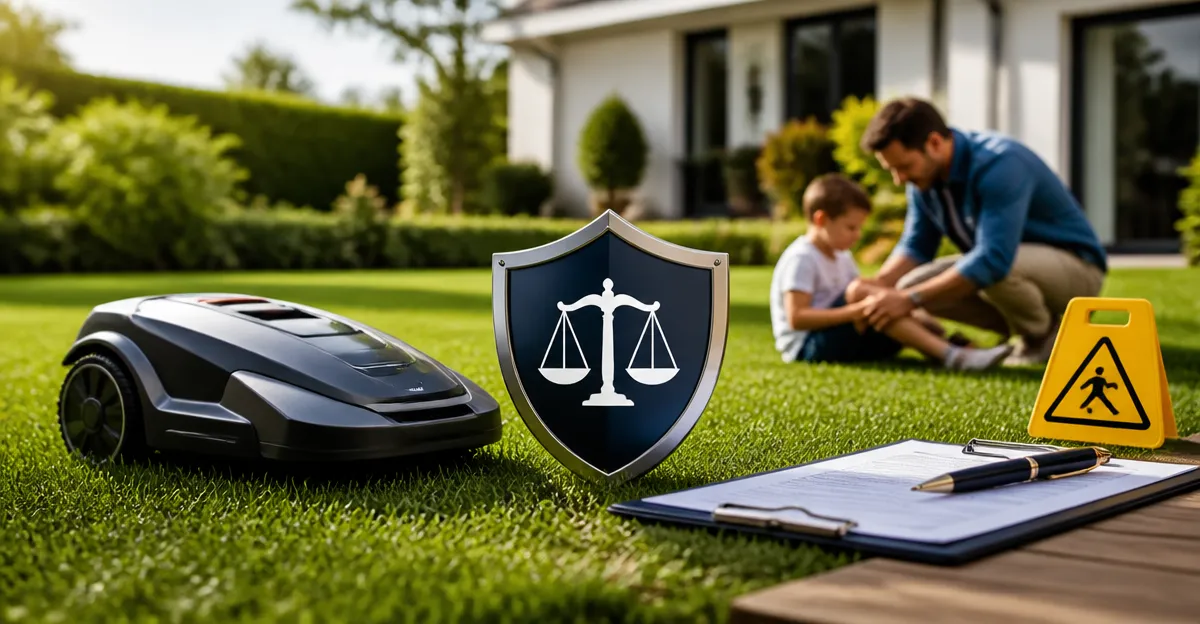
Robotic lawn mowers have transformed yard maintenance, yet they also introduce new legal considerations for homeowners. This guide explains the scope of injury liability, outlines safety regulations, and clarifies how insurance policies intersect with autonomous equipment. Readers will learn how to assess risk, select appropriate devices, and implement best‑practice safeguards to minimise potential lawsuits. By the end, homeowners will possess a clear roadmap for protecting themselves, their families, and their property.
Background and Context
Modern robot mowers combine artificial intelligence, LiDAR, and GPS to navigate lawns without human intervention. While these technologies reduce physical labor, they also create scenarios where a mower may collide with a person, pet, or object, potentially causing injury. Liability hinges on negligence, product defect, and adherence to safety standards such as UL 2909 and ISO 25178. Understanding these foundations is essential before evaluating specific models or drafting insurance clauses.
Legal Liability Overview
Injury claims typically fall into three categories: negligence, strict product liability, and premises liability. Negligence requires proof that the homeowner failed to exercise reasonable care, such as neglecting to install a required safety barrier. Strict product liability focuses on defects inherent to the mower itself, shifting responsibility to the manufacturer if the device is unreasonably dangerous. Premises liability arises when a visitor is injured on the homeowner’s property because the mower was left unattended in a hazardous manner.
Homeowners can mitigate these risks by following manufacturer safety instructions, maintaining up‑to‑date firmware, and employing physical safeguards like magnetic no‑go strips. Courts often view compliance with industry standards as evidence of reasonable care, reducing exposure to negligent‑behavior claims.
Safety Standards and Regulations
Regulatory bodies such as the Consumer Product Safety Commission (CPSC) and Underwriters Laboratories (UL) set performance benchmarks for autonomous mowers. UL 2909, for example, mandates tilt sensors, lift sensors, and emergency stop functions to prevent blade operation when the unit is lifted or tipped. Many manufacturers exceed these requirements, offering rain sensors, obstacle‑avoidance cameras, and magnetic boundary systems.
Homeowners should verify that any mower they purchase carries relevant certifications and that the product documentation lists compliance. Failure to do so may be interpreted as reckless disregard for safety, weakening a defense in liability litigation.
Insurance Considerations
Standard homeowner policies often include personal liability coverage, but the inclusion of autonomous equipment varies by insurer. Some carriers require an endorsement that specifically addresses robotic lawn mowers, adding a modest premium in exchange for coverage of bodily injury and property damage caused by the device. When obtaining quotes, homeowners should ask about "robotic equipment" riders and confirm deductible amounts.
It is also prudent to review the manufacturer’s warranty and liability disclaimer. Many brands provide a limited liability period for defects; however, this does not replace personal insurance. Aligning warranty terms with policy limits ensures there are no gaps in protection.
Product Safety Features and Recommendations
When selecting a mower, prioritize models that integrate multiple safety layers. The YARDCARE V100 offers an intelligent visual navigation system, a tilt sensor that stops blades instantly, and a rain sensor that pauses operation during precipitation. Its 6.3‑inch cutting width and adjustable height from 0.8 to 2.4 inches make it suitable for slopes up to 20 degrees, while the magnetic NO‑GO strip creates virtual barriers without digging.
The HOOKII Neomow X SE incorporates 360° 3D LiDAR and AI‑vision fusion, delivering centimeter‑level positioning and obstacle detection as small as 1 cm wide. Its 13,000 mAh battery provides two hours of run time, and the device includes a rain‑resistant IPX5 rating. For larger properties up to 0.75 acre, the X SE’s customizable zones and remote OTA updates enhance safety and reliability.
The Mammotion LUBA mini 2 combines 360° LiDAR with dual‑camera AI vision, offering redundancy that reduces false‑positive obstacle detection. Its all‑wheel‑drive (AWD) system climbs slopes up to 80 % and includes a drop‑mow mode for quick, unmapped mowing sessions. Smart battery management lets users set charge limits, extending battery lifespan and preventing over‑charging hazards.
The ECOVACS Goat O1000 eliminates boundary wires entirely, using RTK‑enhanced LiDAR to map lawns up to 1/4 acre in five minutes. Its AIVI 3D obstacle avoidance and 45 % slope capability make it a strong candidate for moderate‑size yards where installation simplicity is paramount.
Finally, the Husqvarna Automower iQ 420 leverages Exact Positioning Operating System (EPOS) for satellite‑based centimeter accuracy, large wheels for rough terrain, and an anti‑theft alarm that reports GPS location. Although its price is higher, the brand’s two‑decade reliability record can be a decisive factor for risk‑averse homeowners.
Comparison and Selection Guide
| Feature | YARDCARE V100 | HOOKII Neomow X SE | Mammotion LUBA mini 2 | ECOVACS Goat O1000 | Husqvarna iQ 420 |
|---|---|---|---|---|---|
| Price (USD) | $399.99 | $1,199.00 | $1,699.00 | $699.00 | $1,850.96 |
| Maximum Area | 1,600 sq ft | 0.75 acre (32,670 sq ft) | 0.37 acre (15,000 sq ft) | 0.25 acre (10,890 sq ft) | 1 acre |
| Navigation Tech | Camera‑based visual navigation | 3D LiDAR + AI Vision | 360° LiDAR + Dual‑Camera AI | RTK + Vision + 3D ToF | EPOS (Satellite + Cellular) |
| Safety Sensors | Tilt, lift, rain, bumper | LiDAR, AI, rain, tilt | LiDAR, cameras, bumpers | AIVI 3D, rain, tilt | Radar, tilt, anti‑theft alarm |
| Battery Runtime | 4 Ah battery (full charge per use) | 13,000 mAh – ~2 hrs | High‑capacity – up to 350 m² per charge | ~2 hrs (covers 1/4 acre) | Variable – up to 1 acre per charge |
| Customer Rating | 4.8/5 (58 reviews) | 5/5 (26 reviews) | 4.4/5 (245 reviews) | 4.2/5 (29 reviews) | 3.9/5 (28 reviews) |
Choosing the right mower depends on lawn size, terrain complexity, and the homeowner’s tolerance for installation effort. For small to medium yards where simplicity and cost are primary concerns, the YARDCARE V100 provides reliable visual navigation and a low entry price. Larger properties with uneven ground benefit from the HOOKII Neomow X SE’s LiDAR precision and 0.75‑acre coverage. The Mammotion LUBA mini 2 excels on steep slopes and offers advanced battery‑management features for eco‑conscious users. Homeowners seeking a wire‑free setup without boundary strips may prefer the ECOVACS Goat O1000, while the Husqvarna iQ 420 remains the premium option for those who value brand reputation and extensive warranty support.
Best Practices & Tips for Reducing Liability
- Perform a pre‑deployment safety audit: verify that all sensors are unobstructed, magnetic strips are securely placed, and the charging station is on stable ground.
- Program regular maintenance schedules: clean blades, inspect wheels, and update firmware to incorporate the latest safety patches.
- Educate all household members and frequent visitors about the mower’s operating schedule and emergency stop procedure.
- Utilise the manufacturer’s no‑go zone tools to keep the mower away from pools, play equipment, and high‑traffic walkways.
- Document the installation process with photos and retain receipts; this evidence can be valuable in the event of a claim.
- Consider adding a supplemental liability endorsement to your homeowner’s policy that explicitly covers autonomous lawn equipment.
- When mowing near pets, use the pet‑detect mode (available on several models) and supervise the area until the mower learns the pet’s typical location.
Frequently Asked Questions
- 1. Does a robot mower count as a “dangerous instrument” under homeowner insurance?
- Most policies treat it as a covered appliance, but insurers may require a specific rider for autonomous devices. Verify with your carrier.
- 2. What liability does the manufacturer retain if the mower malfunctions?
- Under strict product liability, manufacturers are responsible for defects that render the product unreasonably dangerous, regardless of homeowner negligence.
- 3. Can I legally leave a robot mower operating while guests are on my property?
- Yes, provided you have taken reasonable precautions—such as activating safety sensors, setting clear no‑go zones, and informing guests of the mower’s presence.
- 4. How often should I replace the blades to maintain safety?
- Blade wear varies by grass type, but most manufacturers recommend replacement after 500‑1,000 mowing hours or when visible dullness appears.
- 5. Are there tax deductions available for purchasing a robot mower?
- Home‑based businesses may deduct a portion of the cost as a business expense; otherwise, the mower is considered a personal improvement and is not tax‑deductible.
- 6. What should I do if the mower injures a child or pet?
- Immediately stop the mower, provide first aid, and document the incident. Notify the manufacturer, your insurer, and, if necessary, local authorities.
- 7. Do all models support remote shutdown via a smartphone app?
- Most premium models—including the HOOKII Neomow X SE, Mammotion LUBA mini 2, and Husqvarna iQ 420—offer an emergency stop feature within their companion apps.
Conclusion
Robot lawn mowers deliver convenience, but they also introduce legal responsibilities that homeowners must address proactively. By understanding liability categories, adhering to safety standards, securing appropriate insurance coverage, and selecting a mower equipped with redundant safety features, one can enjoy a perfectly manicured lawn without exposing oneself to costly lawsuits. The products highlighted in this guide each embody different strengths; matching those strengths to the specific needs of your property will yield the safest and most legally sound outcome.
Products Featured in This Guide
YARDCARE V100
Price: $399.99 | Rating: 4.8/5 (58 reviews)
Featured for its camera‑based visual navigation, tilt and rain sensors, and affordable price point for lawns up to 1,600 sq ft.
HOOKII Neomow X SE
Price: $1,199.00 | Rating: 5/5 (26 reviews)
Highlighted for its 360° LiDAR and AI‑vision fusion, 0.75‑acre coverage, and ultra‑quiet operation suitable for larger, complex yards.
Mammotion LUBA mini 2
Price: $1,699.00 | Rating: 4.4/5 (245 reviews)
Chosen for its dual‑camera AI, AWD capability on 80 % slopes, and smart battery‑management features that extend lifespan.
ECOVACS Goat O1000
Price: $699.00 | Rating: 4.2/5 (29 reviews)
Featured for its wire‑free RTK mapping, rapid five‑minute setup, and AIVI 3D obstacle avoidance for medium‑size lawns.
Husqvarna Automower iQ 420
Price: $1,850.96 | Rating: 3.9/5 (28 reviews)
Included for its long‑standing brand reliability, EPOS satellite positioning, and robust anti‑theft features for up to 1‑acre lawns.