The Ultimate Guide to Wildlife‑Friendly Robot Mowing Patterns
Introduction
Robot lawn mowers have transformed the way homeowners maintain their yards, but they also influence the habitats of birds, insects, and small mammals. This guide explains how to select mowing patterns that minimise disturbance to wildlife while still delivering a pristine lawn. Readers will learn essential concepts, compare leading robot mowers, and receive actionable tips for creating a wildlife‑friendly mowing schedule.
By the end of this article, one will understand the ecological impact of different mowing strategies, know which robot mower features support safe operation, and be equipped to implement a plan that balances aesthetics with biodiversity.
Background and Context
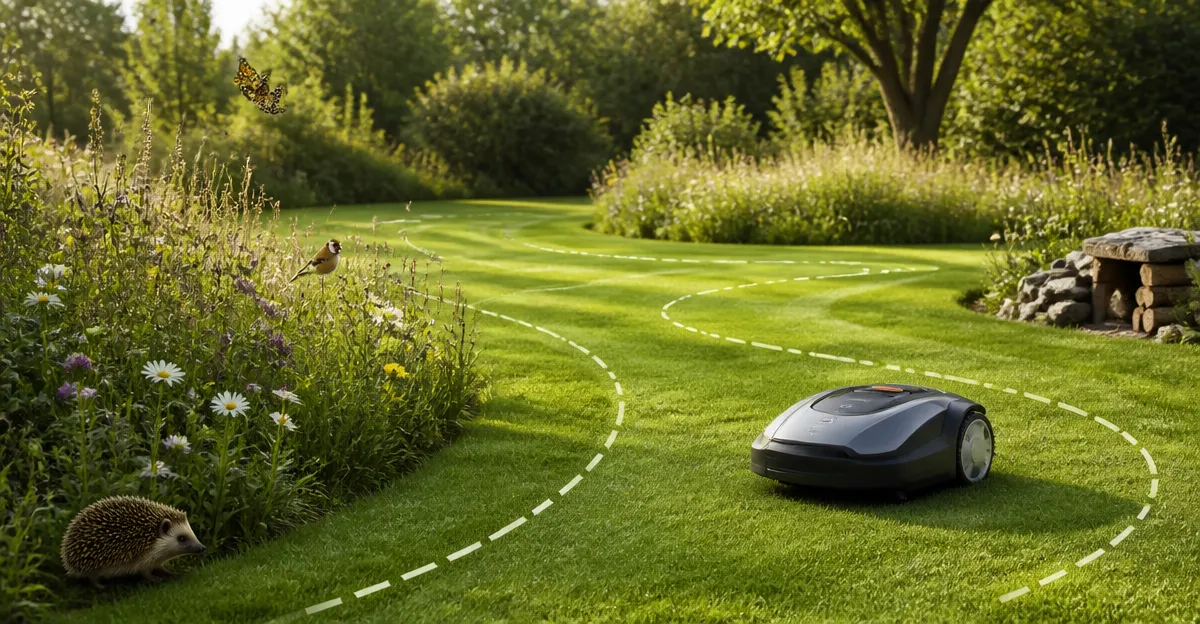
Many species rely on grassland edges, unmowed strips, and low‑height vegetation for nesting, foraging, and shelter. Traditional rotary mowers often cut large swaths at once, removing these micro‑habitats and exposing ground‑nesting birds to predators. Robot mowers, however, can be programmed to follow precise patterns, allowing owners to preserve refuge zones.
Key ecological principles include:
- Edge effect: The transition zone between cut and uncut grass supports a higher diversity of insects.
- Temporal refuge: Leaving sections uncut for a few weeks each season gives insects time to complete life cycles.
- Noise reduction: Quiet operation reduces stress on wildlife that is sensitive to sudden sounds.
When selecting a robot mower, look for features such as customizable zones, low‑noise motors, and precise navigation that enable selective mowing.
Choosing the Right Mowing Pattern
Three primary patterns are recommended for wildlife‑friendly mowing: Striped Edge‑Preserve, Checkerboard Refuge, and Dynamic Random. Each pattern can be implemented through the mower’s app, and each offers a different balance of lawn uniformity and habitat retention.
Striped Edge‑Preserve
This pattern creates parallel stripes across the lawn while leaving a narrow border—typically 12–18 inches—untouched along fences, hedges, and water features. The untouched border acts as a corridor for insects and small mammals.
Robotic mowers that support custom stripe width and edge‑cutting capabilities excel in this approach. For example, the WORX Wire‑Free Robot Lawn Mower offers centimeter‑level RTK Cloud accuracy and a dedicated cut‑to‑edge feature that can be set to stop a few inches before a fence, preserving the edge habitat.
Key specifications that matter:
- RTK Cloud accuracy: centimeter‑level positioning ensures consistent stripe spacing.
- Wheel brush design: reduces slippage on wet grass, maintaining even cuts.
- Battery capacity: an extra battery (sold separately) allows the mower to complete larger lawns without interruption.
Checkerboard Refuge
In a checkerboard layout, the mower alternates between cut and uncut squares, typically 3‑5 ft on a side. This creates a mosaic of habitats that mimics natural grassland patterns. The uncut squares serve as safe zones for ground‑nesting birds and pollinators.
The ECOVACS Goat A2000 provides dual‑LiDAR navigation and an infinite zone mowing system, allowing owners to draw multiple square zones and set them to “pause” during breeding seasons.
Important features for this pattern include:
- Dual‑LiDAR mapping: ensures precise square boundaries even under tree canopy.
- Built‑in edge trimmer: trims along driveways while leaving designated squares untouched.
- Fast charging (50 min): reduces downtime between mowing cycles.
Dynamic Random
Some wildlife thrives on unpredictability. A dynamic random pattern varies the mower’s path each day, preventing insects from adapting to a predictable schedule. The randomness also reduces the risk of over‑grazing any single area.
The ECOVACS Goat O1000 offers AI vision combined with 3D LiDAR, allowing the app to generate randomised mowing routes while still respecting user‑defined no‑go zones.
Features that support dynamic randomness:
- AI obstacle avoidance: safely navigates around unexpected objects.
- Customizable mowing patterns: users can switch between parallel, checkerboard, diamond, or natural patterns on the fly.
- Rain detection: automatically pauses mowing during wet conditions, protecting soil structure.
Product Comparison and Selection Guide
When selecting a robot mower for wildlife‑friendly use, consider the following criteria:
| Criterion | WORX Wire‑Free | ECOVACS Goat A2000 | ECOVACS Goat O1000 | ECOVACS Goat O1000 RTK | Husqvarna Automower 420 iQ |
|---|---|---|---|---|---|
| Price (USD) | $799.99 | $1,399.00 | $999.00 | $664.00 | $1,951.46 |
| Rating | 4.5/5 (23 reviews) | 3.9/5 (152 reviews) | 4.0/5 (140 reviews) | 3.9/5 (152 reviews) | 3.8/5 (27 reviews) |
| Navigation Tech | RTK Cloud + V‑SLAM | Dual‑LiDAR 360° | Dual‑LiDAR + AI Vision | RTK + Extension Cable | EPOS® GPS + Cellular |
| Edge‑Cutting | Cut‑to‑Edge AI | Built‑in TruEdge trimmer | Built‑in TruEdge trimmer | Standard wheel brush | Standard bumper |
| Battery Life | ~60 min (extra battery optional) | ~50 min fast charge | ~60 min per charge | ~70 min | ~70 min |
| Zone Flexibility | Infinite zones via app | Custom zones, limited remote control | Unlimited zones, AI‑driven | Multi‑zone auto‑mapping | Multi‑zone via app |
For homeowners with modest budgets who still require precise edge control, the WORX Wire‑Free Robot Lawn Mower provides the best value. Larger properties that need robust mapping under dense canopy will benefit from the ECOVACS Goat A2000 or O1000. If centimeter‑level positioning without a separate antenna is essential, the ECOVACS Goat O1000 RTK offers an affordable RTK solution. Finally, the Husqvarna Automower 420 iQ remains the premium choice for users who prefer GPS‑based navigation and a proven brand legacy.
Best Practices & Tips for Wildlife‑Friendly Robot Mowing
- Map with Habitat in Mind: When creating zones, deliberately leave at least one 10‑ft strip along natural borders untouched for at least two weeks each month.
- Schedule Seasonal Adjustments: Reduce mowing frequency during breeding seasons (spring‑early summer) to allow insects to complete life cycles.
- Maintain Low Noise Levels: Choose models with brushless motors (e.g., WORX and ECOVACS) to minimise acoustic disturbance.
- Utilise Rain Sensors: Enable automatic pause during rain to prevent soil compaction and protect ground‑nesting species.
- Inspect Regularly: Walk the perimeter after each mowing cycle to ensure that edge‑cutting blades have not inadvertently removed refuge strips.
- Combine with Manual Trimming: Use the mower’s built‑in trimmer for hard‑to‑reach edges, but manually trim only when necessary to preserve habitat.
- Educate Household Members: Explain why certain zones remain uncut; this encourages compliance and reduces accidental interference.
Frequently Asked Questions
1. Will robot mowers harm small mammals?
Modern robot mowers operate at speeds of 1–2 mph and include obstacle detection. When zones are set correctly, the risk to small mammals is minimal. However, always keep the mower away from known burrow entrances.
2. How often should I leave an uncut refuge?
Leaving a 12‑inch border or a 3‑ft square patch uncut for two to three weeks per season provides sufficient shelter for most insects and ground‑nesting birds.
3. Can I program the mower to avoid a specific flower bed?
Yes. All featured models support no‑go zones via their companion apps. Simply draw the polygon around the bed and mark it as a restricted area.
4. Do these mowers work in shaded areas?
Both RTK‑based and LiDAR‑based systems maintain accuracy in shade. The WORX Vision Cloud uses V‑SLAM, while ECOVACS models rely on dual‑LiDAR, both of which function without GPS signals.
5. What is the typical maintenance schedule?
Blade replacement every 500‑1,000 mowing hours, battery health checks annually, and cleaning the wheel brush (WORX) or trimmer line (ECOVACS) after each season are recommended.
6. Is a subscription required for cloud features?
Only the WORX Vision Cloud advertises “no additional cloud costs.” ECOVACS and Husqvarna provide basic mapping for free, though optional premium services may incur fees.
Conclusion
Integrating wildlife‑friendly mowing patterns with advanced robot mower technology enables homeowners to maintain immaculate lawns while protecting local ecosystems. By selecting a mower with precise navigation, customizable zones, and low‑noise operation, one can create edge‑preserve, checkerboard, or dynamic random patterns that sustain insects, birds, and small mammals. Implementing the best‑practice tips outlined above will ensure that the lawn remains both beautiful and biologically diverse.
Products Featured in This Guide
WORX Wire‑Free Robot Lawn Mower
Price: $799.99 | Rating: 4.5/5 (23 reviews)
Featured for its centimeter‑level RTK Cloud accuracy, AI edge‑cutting, and affordable price, making it ideal for striped edge‑preserve patterns.
ECOVACS Goat A2000
Price: $1,399.00 | Rating: 3.9/5 (152 reviews)
Chosen for its dual‑LiDAR navigation and built‑in edge trimmer, which support checkerboard refuge layouts on medium‑to‑large lawns.
ECOVACS Goat O1000
Price: $999.00 | Rating: 4.0/5 (140 reviews)
Highlights AI vision and 3D LiDAR for dynamic random patterns, providing flexible habitat preservation on complex yards.
ECOVACS Goat O1000 RTK
Price: $664.00 | Rating: 3.9/5 (152 reviews)
Offers RTK precision without a separate antenna, making it a cost‑effective option for users who need exact zone boundaries.
Husqvarna Automower 420 iQ
Price: $1,951.46 | Rating: 3.8/5 (27 reviews)
Featured for its EPOS® GPS system, robust build, and extensive warranty, suitable for users who prefer a proven brand with cellular connectivity.