Introduction
Modern homeowners are seeking ways to maintain a pristine lawn while reducing environmental impact. This guide explains the concept of solar‑assisted robot mowers, outlines the energy savings they provide, and presents strategies for smarter lawn care. Readers will learn how solar technology integrates with autonomous mowing, discover key benefits, and receive curated product recommendations. By the end of the article, one will be equipped to choose a suitable model and implement best‑practice maintenance routines.
Background / Context
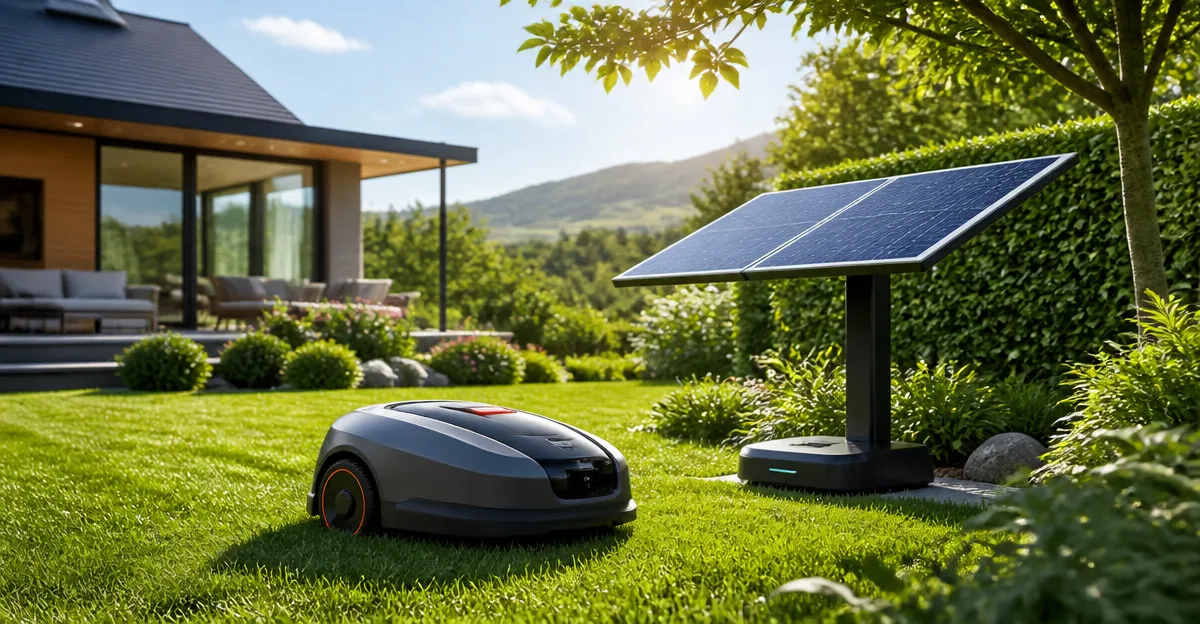
Traditional gasoline mowers consume fossil fuels, emit pollutants, and require regular maintenance. Battery‑powered robot mowers have mitigated some of these drawbacks, yet their operating time is limited by battery capacity. Solar assistance addresses this limitation by harvesting sunlight to extend runtime and reduce charging frequency. The technology relies on photovoltaic panels mounted on the mower or a dedicated charging station, converting solar radiation into electrical energy that replenishes the battery during daylight hours. Understanding these fundamentals is essential before evaluating specific products.
How Solar Assistance Works
Solar panels consist of semiconductor cells that generate direct current when exposed to photons. In a robot mower, the generated power is either stored directly in the onboard lithium‑ion battery or used to supplement the charging process at the base station. The mower’s control system monitors battery state‑of‑charge and dynamically adjusts mowing speed and blade torque to conserve energy when sunlight is scarce. This adaptive behavior ensures consistent performance across varying weather conditions while maximizing renewable energy utilization.
Key Benefits of Solar‑Assisted Robot Mowers
- Reduced Electricity Costs: Solar input decreases reliance on grid electricity, lowering monthly utility bills.
- Extended Operational Hours: Mowers can operate longer between manual charges, especially in sunny climates.
- Environmental Sustainability: Zero emissions during operation contribute to a smaller carbon footprint.
- Lower Maintenance Overhead: Fewer charging cycles prolong battery lifespan, reducing replacement expenses.
- Quiet Operation: Electric drive trains produce less noise than gasoline engines, enhancing neighborhood harmony.
Each benefit aligns with broader trends toward smart home automation and renewable energy adoption. Homeowners who prioritize sustainability will find solar assistance a compelling addition to their lawn care ecosystem.
Product Recommendations
ECOVACS Goat A3000
The ECOVACS Goat A3000 combines dual‑LiDAR navigation with a 32 V high‑power system capable of handling dense American grass species. Its 7500 mAh battery and 189 W fast‑charging module deliver up to 70 minutes of rapid recharge, enabling continuous mowing on lawns up to three‑quarters of an acre. The built‑in TruEdge trimmer provides edge‑to‑edge cutting, reducing the need for manual string trimming. With a rating of 3.9 stars from 120 reviews, users praise its precise mapping and time‑saving automation, while noting occasional app usability issues. At a price of $1,799.00, the Goat A3000 represents a premium option for users seeking advanced navigation without perimeter wires.
ECOVACS Goat O1000
The ECOVACS Goat O1000 offers RTK precision navigation, delivering centimeter‑level positioning without a boundary wire. It includes 36 extra blades, extending long‑term cutting performance and reducing maintenance frequency. The mower’s 165 W dual‑blade system and 12 Ah battery support lawns up to 0.4 acre, making it suitable for medium‑size residential yards. Reviewers assign a 4.1‑star rating based on 106 comments, highlighting its durability, easy setup, and reliable obstacle handling. Priced at $664.00, the O1000 provides a cost‑effective entry point for homeowners desiring high accuracy and low long‑term operating costs.
Mammotion LUBA 3 AWD
The Mammotion LUBA 3 AWD integrates 360° LiDAR, NetRTK, and AI vision for robust navigation across complex terrain. Its all‑wheel‑drive system climbs slopes up to 80 % and negotiates obstacles up to 50 mm high. Two 165 W motors with six‑blade discs deliver a cutting width of 17 inches and a coverage rate of up to 500 m² per hour. Users rate the mower 4.4 stars from 28 reviews, appreciating its reliability on steep slopes and its adaptive path planning. The price of $2,448.00 reflects its high‑end positioning for demanding lawns up to 0.75 acre.
Segway Navimow X430
The Segway Navimow X430 features ORV‑tuned all‑wheel‑drive capable of handling 84 % slopes and obstacles up to 2.8 inches. Its dual 180 W motors and 12‑blade cutting system provide a 17‑inch cutting width, while EFLS tri‑frequency Network RTK ensures centimeter‑level accuracy. Reviewers assign a 4.2‑star rating from 103 comments, noting excellent cut quality and quiet operation, though some cite battery limitations on larger properties. At $2,499.00, the X430 targets users who need rugged performance on steep, uneven terrain.
YARDCARE N1600 Pro
The YARDCARE N1600 Pro utilizes RTK combined with AI vision for precise mapping of lawns up to 0.4 acre. Its 3D obstacle avoidance system recognizes over 300 object types, enhancing safety around pets and garden furniture. The mower operates quietly, supports cutting heights from 0.8 to 2.4 inches, and maintains performance on slopes up to 20 °. With a flawless 5‑star rating from 11 reviews, the N1600 Pro stands out for its intuitive app interface and consistent trimming results. The price of $799.99 positions it as a mid‑range solution for tech‑savvy homeowners.
Comparison and Selection Guide
Choosing the right solar‑assisted robot mower requires evaluating several criteria, including lawn size, terrain complexity, budget, and desired level of automation. The table below summarizes key specifications to aid decision‑making.
| Model | Lawn Capacity | Power (W) | Battery Capacity | Navigation Tech | Price (USD) | Rating |
|---|---|---|---|---|---|---|
| ECOVACS Goat A3000 | Up to 0.75 acre | 32 V system (approx. 400 W equivalent) | 7500 mAh | Dual‑LiDAR | 1,799.00 | 3.9/5 (120) |
| ECOVACS Goat O1000 | Up to 0.4 acre | 165 W dual‑blade | 12 Ah | RTK Precision | 664.00 | 4.1/5 (106) |
| Mammotion LUBA 3 AWD | Up to 0.75 acre | 165 W ×2 | 12 Ah | LiDAR + NetRTK + AI Vision | 2,448.00 | 4.4/5 (28) |
| Segway Navimow X430 | Up to 1 acre | 180 W ×2 | Not disclosed (estimated 12 Ah) | Network RTK + 360° Vision | 2,499.00 | 4.2/5 (103) |
| YARDCARE N1600 Pro | Up to 0.4 acre | Brushless motor (approx. 200 W) | Not disclosed | RTK + AI Vision | 799.99 | 5/5 (11) |
For large, uneven properties with steep slopes, the Mammotion LUBA 3 AWD or Segway Navimow X430 provide the necessary traction and advanced navigation. Homeowners with moderate‑size lawns and a focus on precision should consider the ECOVACS Goat O1000 or YARDCARE N1600 Pro. The ECOVACS Goat A3000 offers a balanced feature set for medium‑to‑large yards but may require additional app familiarity.
Best Practices & Tips
- Perform a thorough site survey before deployment. Identify shade‑heavy zones, steep inclines, and potential obstacles to ensure the mower’s sensors can operate effectively.
- Optimize solar exposure by positioning the charging station in an unobstructed, sun‑lit area. Clear debris and trim overhanging branches that could cast shadows on photovoltaic panels.
- Calibrate cutting height according to grass type. For Bermuda or Zoysia, a height of 1.5–2.0 inches yields optimal health, while taller settings benefit St. Augustine in hot climates.
- Schedule mowing during early morning or late afternoon to avoid peak heat, which can reduce battery efficiency and increase wear on blades.
- Regularly clean the mower’s wheels, sensors, and cutting discs. Accumulated grass clippings can impair LiDAR or camera accuracy, leading to navigation errors.
- Utilize multi‑zone mapping to allocate battery resources efficiently. Assign high‑traffic areas to shorter intervals and low‑maintenance zones to longer cycles.
- Monitor firmware updates through the manufacturer’s app. Software enhancements often improve solar charging algorithms and obstacle‑avoidance capabilities.
Frequently Asked Questions
1. How much sunlight is required for a solar‑assisted mower to operate effectively?
Most models achieve optimal charging with at least four hours of direct sunlight per day. Cloudy climates may still provide sufficient energy if the mower’s battery capacity is sized for the intended lawn area.
2. Can solar‑assisted mowers operate at night?
Yes. The mower stores solar‑generated electricity in its lithium‑ion battery, allowing it to continue mowing after sunset until the battery reaches its programmed low‑charge threshold.
3. Do I need a separate solar panel array?
Some premium models integrate panels onto the mower chassis, while others rely on a solar‑enhanced charging dock. The choice depends on the manufacturer’s design; both approaches deliver comparable energy savings.
4. Will the solar system increase the overall cost significantly?
The incremental cost is typically embedded in the purchase price. Long‑term electricity savings and extended battery life often offset the initial premium within two to three years of operation.
5. Are there maintenance differences compared to non‑solar robot mowers?
Solar panels require periodic cleaning to remove dust and pollen, similar to solar home systems. Otherwise, maintenance routines for blades, wheels, and software remain unchanged.
6. How reliable is the navigation in dense foliage?
Models employing RTK or multi‑sensor fusion (LiDAR, AI vision) maintain high accuracy even under moderate canopy. However, extremely dense tree cover may still degrade signal quality, necessitating strategic placement of the base station.
Conclusion
Solar‑assisted robot mowers represent a convergence of renewable energy and autonomous lawn care, delivering measurable cost savings, environmental benefits, and convenience. By understanding the underlying technology, evaluating lawn size and terrain, and selecting a model that aligns with personal priorities, homeowners can achieve a consistently manicured yard with minimal manual effort. The products highlighted in this guide illustrate the range of capabilities available today, from budget‑friendly precision mowers to rugged all‑terrain machines capable of conquering steep slopes. Implementing the recommended best practices will further enhance performance and longevity, ensuring that the investment yields lasting value.
Products Featured in This Guide
ECOVACS Goat A3000
Price: $1,799.00 | Rating: 3.9/5 (120 reviews)
Featured for its dual‑LiDAR navigation, fast charging, and built‑in edge trimmer, making it a comprehensive solution for medium‑to‑large lawns.
ECOVACS Goat O1000
Price: $664.00 | Rating: 4.1/5 (106 reviews)
Featured for its RTK precision navigation and inclusion of 36 extra blades, offering high accuracy and low long‑term maintenance costs.
Mammotion LUBA 3 AWD
Price: $2,448.00 | Rating: 4.4/5 (28 reviews)
Featured for its tri‑fusion navigation, all‑wheel‑drive capability, and ability to tackle steep slopes and uneven terrain.
Segway Navimow X430
Price: $2,499.00 | Rating: 4.2/5 (103 reviews)
Featured for its ORV‑tuned all‑wheel‑drive, dual 180 W motors, and elite positioning technology suitable for challenging slopes.
YARDCARE N1600 Pro
Price: $799.99 | Rating: 5/5 (11 reviews)
Featured for its RTK+AI vision dual positioning, 3D obstacle avoidance, and quiet operation, making it ideal for tech‑savvy users with modest lawn sizes.