Introduction
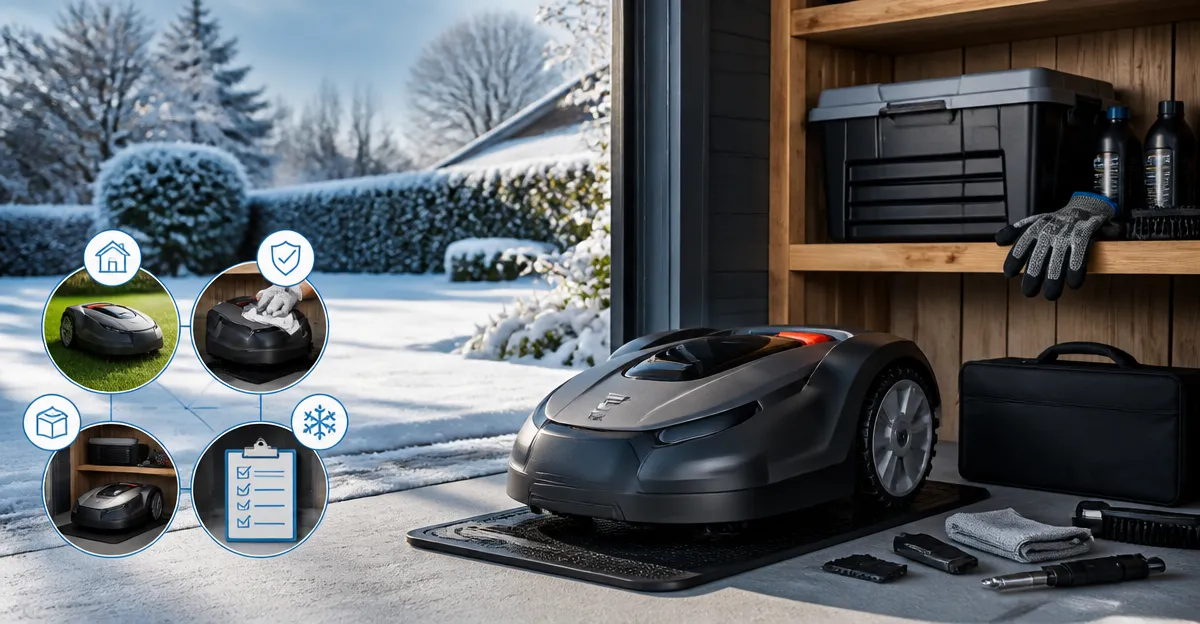
This guide explains how to protect wire‑free robot lawn mowers during the cold months. Readers will learn why winter storage matters, which steps prevent damage, and how to keep the mower ready for spring. The article also recommends specific models that excel in durability and ease of maintenance.
By following the procedures outlined here, owners can avoid costly repairs, preserve battery health, and extend the lifespan of their investment. Whether you own a high‑end Segway Navimow X430 or a compact Segway Navimow i105N, the principles apply universally.
The guide is organized into background information, step‑by‑step winterization, product comparisons, best‑practice tips, and a concise FAQ. Each section balances theory with actionable advice.
Background / Context
Wire‑free robot mowers rely on batteries, electronic sensors, and precise navigation systems such as RTK (Real‑Time Kinematic) positioning. Cold temperatures reduce battery capacity, increase internal resistance, and can cause moisture ingress that harms circuitry. Additionally, snow, ice, and debris may obstruct wheels, sensors, and charging contacts.
Manufacturers design these devices for seasonal operation, assuming owners will store them when grass growth stops. Proper storage mitigates the effects of temperature fluctuations, humidity, and mechanical wear. Understanding the underlying technology helps users make informed decisions about cleaning, battery conditioning, and protective housing.
Key technical concepts include:
- Battery chemistry: Most mowers use lithium‑ion cells that degrade faster at sub‑zero temperatures.
- RTK navigation: Requires clear sky view; snow cover can block satellite signals.
- Obstacle‑avoidance sensors: Cameras and 3‑D ToF sensors can be damaged by moisture or freezing condensation.
With this context, the winterization process becomes a logical series of preventative actions.
Preparing the Mower for Winter
Before the first frost, perform a thorough cleaning and inspection. Remove all grass clippings, leaves, and soil using a soft brush or compressed air. Pay special attention to the cutting deck, wheels, and sensor lenses.
Next, check the battery health. For models such as the Segway Navimow X430, which features dual 180 W motors and a 0.75–4 in cutting height, charge the battery to approximately 80 % before storage. This charge level minimizes stress while preserving capacity.
Secure the charging station in a dry, temperature‑controlled area (ideally 10–20 °C). If the station must remain outdoors, cover it with a waterproof enclosure and elevate it to avoid snow accumulation.
Finally, update the firmware. Manufacturers regularly release patches that improve battery management and sensor calibration. An up‑to‑date mower will start the next season with optimal performance.
Storage Environment
The ideal storage location is a clean, indoor space with moderate humidity (30‑50 %). Avoid basements prone to flooding and garages that experience extreme temperature swings.
If indoor storage is not possible, construct a portable shelter using weather‑resistant fabric or a rigid plastic bin. Include ventilation holes to prevent condensation, and place a silica‑gel packet near the mower to absorb moisture.
For larger units such as the Segway Navimow i110N, which covers up to 1/4 acre, consider a dedicated storage cabinet with wheels for easy relocation. Ensure the cabinet door does not seal completely, as trapped air can cause frost buildup on sensors.
Label the storage container with the model name, purchase date, and warranty information. This practice simplifies future servicing and warranty claims.
Battery Care During Winter
Lithium‑ion batteries degrade faster when left at full charge in cold conditions. Store the battery at 40–60 % charge if the mower will remain idle for more than three months. Most mowers allow the battery to be removed; if so, store the battery in a fire‑proof container.
Periodically (every 4‑6 weeks) inspect the battery voltage using the app. If the charge drops below 30 %, recharge to the recommended 80 % level. This “top‑up” routine prevents deep discharge, which can render the battery unusable.
For models equipped with smart charging, such as the Segway Navimow X430, enable the “maintenance mode” feature if available. This mode supplies a low‑current trickle charge that keeps the battery at a safe voltage without overcharging.
Do not store the battery near heat sources, as elevated temperatures accelerate chemical breakdown.
Protecting Sensors and Mechanical Parts
Vision‑based navigation systems, like the 360° Vision and VIO used in the Segway Navimow X430, are vulnerable to dust and moisture. Apply a thin layer of anti‑static spray to camera lenses and cover them with a soft cloth.
Wheel treads should be inspected for wear. If the mower includes an ORV‑tuned dual suspension, as the X430 does, clean the suspension pivots and apply a light lubricant to prevent rust.
Store the cutting deck with the blades retracted or removed if the model permits. For the Segway Navimow i105N, which ships with spare blades, keep the extras in a sealed bag to avoid corrosion.
Finally, secure any detachable accessories (e.g., the 4G anti‑theft module for the i105N) in a separate pouch to prevent loss.
Winter Maintenance Checklist
| Task | Frequency | Details |
|---|---|---|
| Clean mower exterior | Before first frost | Brush off debris, wipe sensors, check wheel bearings. |
| Charge battery to 80 % | Before storage | Use app to monitor charge level. |
| Remove battery (optional) | If storing >3 months | Store in fire‑proof container at 40‑60 % charge. |
| Update firmware | Before storage | Connect to Wi‑Fi and apply latest version. |
| Cover charging station | Immediately after charging | Use waterproof enclosure. |
| Inspect cables & antenna | Every 6 weeks | Check for fraying, reposition for optimal signal. |
| Top‑up battery | Every 4‑6 weeks | Recharge to 80 % if voltage falls below 30 %. |
Comparison / Selection Guide
Choosing the right robot mower for winter resilience depends on yard size, terrain, and budget. The following table compares the five featured models based on key winter‑relevant attributes.
| Model | Coverage | Battery Capacity | Winter‑Ready Features | Rating |
|---|---|---|---|---|
| Segway Navimow X430 | Up to 1 acre | Dual 180 W motors, high‑capacity pack | All‑wheel drive, zero‑turn, AI‑vision, robust charging dock | 4.2/5 (99 reviews) |
| Segway Navimow i110N | 1/4 acre | Standard Li‑ion | RTK+Vision, AI‑assist mapping, optional 4G module | 4/5 (502 reviews) |
| Ecovacs Goat O1000 | 1/4 acre | Integrated RTK battery | LiDAR‑enhanced RTK, AIVI 3D avoidance, TruEdge | 4/5 (18 reviews) |
| Ecovacs Goat O1000 Care | 1/4 acre | Extended‑life pack | Extra blades, RTK extension cable, CARE bundle | 4/5 (146 reviews) |
| Segway Navimow i105N | Up to 1/4 acre (now 1200 m²) | Standard Li‑ion | EFLS 2.0 RTK, 150+ obstacle detection, OTA updates | 4.1/5 (394 reviews) |
For owners in colder climates, the X430 offers the most robust drivetrain and battery capacity, making it the safest choice for winter storage. Smaller yards may benefit from the i105N or Goat O1000 Care, which provide interchangeable blades and easier battery handling.
Best Practices & Tips
- Store the mower on a level surface to prevent wheel deformation.
- Wrap the charging cable in a rubber sleeve to protect against frost cracking.
- Enable “sleep mode” in the app if the mower will be idle for more than a month.
- Record the serial number and warranty dates in a digital note for quick reference.
- Consider a small heater (e.g., a thermostatically‑controlled heat mat) inside the storage box if ambient temperatures regularly drop below 0 °C.
When spring arrives, perform a pre‑season inspection: verify battery voltage, clean sensor lenses, and run a short test mow on a cleared patch. This routine catches any winter‑induced issues before they affect full‑yard performance.
FAQ
1. Can I leave my robot mower outdoors during winter?
It is not recommended. Exposure to snow, ice, and extreme temperature swings can damage the battery, motor seals, and vision sensors. A sheltered, insulated enclosure is the safest option.
2. How often should I charge the battery while it is stored?
Check the voltage every 4‑6 weeks and top‑up to 80 % if it falls below 30 %. Most apps provide a battery health dashboard that simplifies monitoring.
3. Will the RTK navigation work after a long period of storage?
Yes, provided the antenna has an unobstructed view of the sky when you reactivate the mower. Re‑calibrate the RTK module using the app’s “signal check” feature before the first spring mow.
4. My mower’s cutting blades are rusted after winter. How can I prevent this?
Remove the blades before storage, clean them with a mild detergent, dry thoroughly, and apply a thin coat of anti‑corrosion oil. Store spare blades in a sealed bag.
5. Is it safe to store the battery in a garage that gets very cold?
Cold garages can reduce battery capacity dramatically. If the garage temperature stays below 5 °C, relocate the battery to a heated indoor space or use a battery‑warming mat.
6. Do I need to update firmware before winter?
Yes. Firmware updates often include improved battery‑management algorithms that protect the pack during low‑temperature storage.
7. Can I use a regular lawn‑mower battery charger on these devices?
No. Each robot mower uses a proprietary charging protocol. Use the supplied charging station or an approved replacement from the manufacturer.
Conclusion
Winterizing a wire‑free robot lawn mower is a systematic process that safeguards batteries, sensors, and mechanical components. By cleaning thoroughly, charging to the proper level, storing in a controlled environment, and performing periodic checks, owners can avoid common winter‑related failures. Selecting a model with robust drivetrain and smart battery features—such as the Segway Navimow X430—further reduces risk. Follow the checklist, adhere to best‑practice tips, and your mower will be ready for a seamless spring start.
Products Featured in This Guide
Segway Navimow X430
Price: $2,249.00 | Rating: 4.2/5 (99 reviews)
Featured for its all‑wheel drive, zero‑turn steering, and high‑capacity dual‑motor system that make it especially resilient to winter storage challenges.
Segway Navimow i110N
Price: $788.00 | Rating: 4/5 (502 reviews)
Chosen for its RTK+Vision navigation and AI‑assist mapping, which simplify re‑calibration after winter storage.
Ecovacs Goat O1000
Price: $699.00 | Rating: 4/5 (18 reviews)
Highlighted for its LiDAR‑enhanced RTK system and AIVI 3D obstacle avoidance, which remain reliable after long periods of inactivity.
Ecovacs Goat O1000 Care
Price: $664.00 | Rating: 4/5 (146 reviews)
Included for its CARE bundle with extra blades and RTK extension cable, which simplify maintenance after winter storage.
Segway Navimow i105N
Price: $669.00 | Rating: 4.1/5 (394 reviews)
Selected for its affordable price, 150+ obstacle detection, and OTA updates that keep the mower secure throughout the winter months.
Frequently Asked Questions
Why should I store my wire‑free robot lawn mower during winter?
Cold temperatures can degrade battery capacity and damage electronic components, so proper storage prevents costly repairs and extends the mower’s lifespan.
How should I prepare the battery before winter storage?
Fully charge the battery, then store it in a cool, dry place at about 40‑50 °F (4‑10 °C) and recharge it every 2‑3 months.
Do I need to clean the mower before putting it away?
Yes, remove grass clippings and debris, wipe the chassis, and inspect the cutting blades for wear to avoid corrosion during storage.
What is the best way to protect the mower’s sensors and navigation system?
Cover the sensor housing with a breathable dust cover and store the mower in its original box or a sealed container to keep moisture out.
Can I leave the mower outdoors in a sheltered area for winter?
It’s not recommended; exposure to moisture and temperature fluctuations can damage the electronics—store it indoors in a climate‑controlled space instead.